
The Quiet Work of Koji
Introducing the Koji
Once the koji has been introduced, the process becomes less about adding, and more about guiding its development.
Inside the warm, carefully controlled environment of the koji muro—the dedicated room for cultivating the Koji— the rice begins to change. What was once simply steamed grain is now alive with activity. Heat is generated from within. Moisture settles and redistributes. Gradually, the koji takes hold—spreading across each grain.
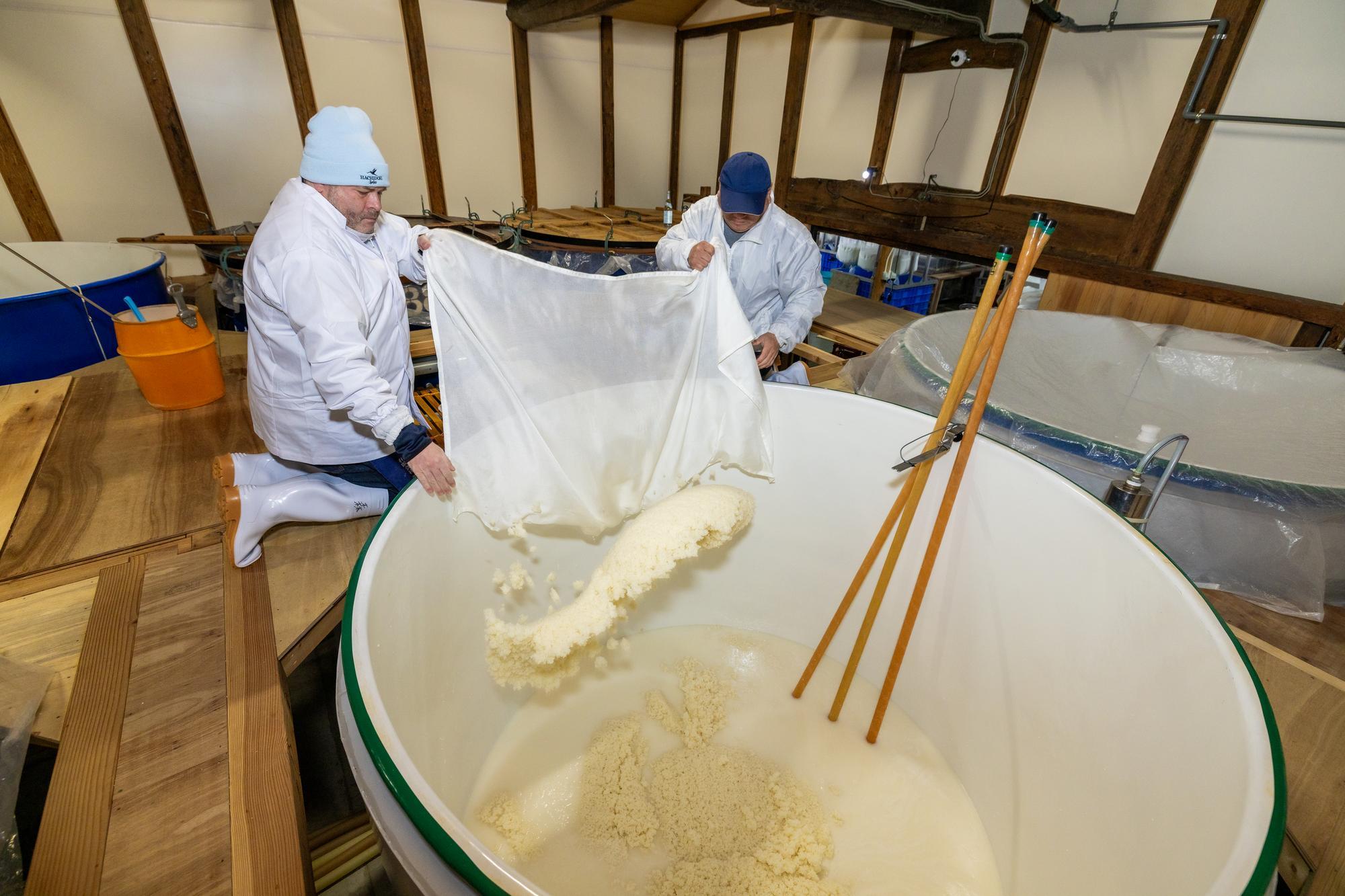
From this point forward, the rice cannot be left unattended. The brewer returns to it again and again—gently breaking apart clumps, turning the rice by hand, and redistributing it to ensure even growth. The movements are deliberate. Rice is lifted, loosened, and spread out, then gathered back together. Each adjustment allows air to circulate and heat to dissipate, guiding the development of the koji.
This is not a one-time action, but a continuous process over many hours and days.
Precision and Control
As the koji grows, it generates its own warmth. Left unchecked, this heat can build too quickly, causing the mold to grow unevenly or too aggressively. The brewer manages this by touch—feeling for temperature changes—and by timing each intervention carefully.
Too warm, and the balance is lost.
Too cool, and the transformation slows.
Balance must be maintained at every stage.
There is also a shift in texture. The rice begins to lose its initial firmness, becoming slightly lighter, more delicate. A fine, white bloom gradually appears, marking the presence of koji as it takes hold. The aroma evolves as well—moving from simple steamed rice to something deeper: softly sweet and nutty.
These changes are subtle, but they guide every decision.
At Hachidori, this step is approached with patience and attention. There is no automation that can replace the awareness required here. Each batch is slightly different, and the brewer responds in real time—adjusting based on what the rice reveals.
This is the point where precision meets intuition, where knowledge is applied through touch, scent, and experience. Every movement—every turn of the rice—supports an even, balanced development that will carry forward into fermentation.
The Beginning of Transformation
By the end of this stage, the rice has been transformed.
Not dramatically, not all at once—but steadily, grain by grain.
And within that transformation lies the foundation of sake’s depth, structure, and character—quietly taking shape long before it ever reaches the tank.